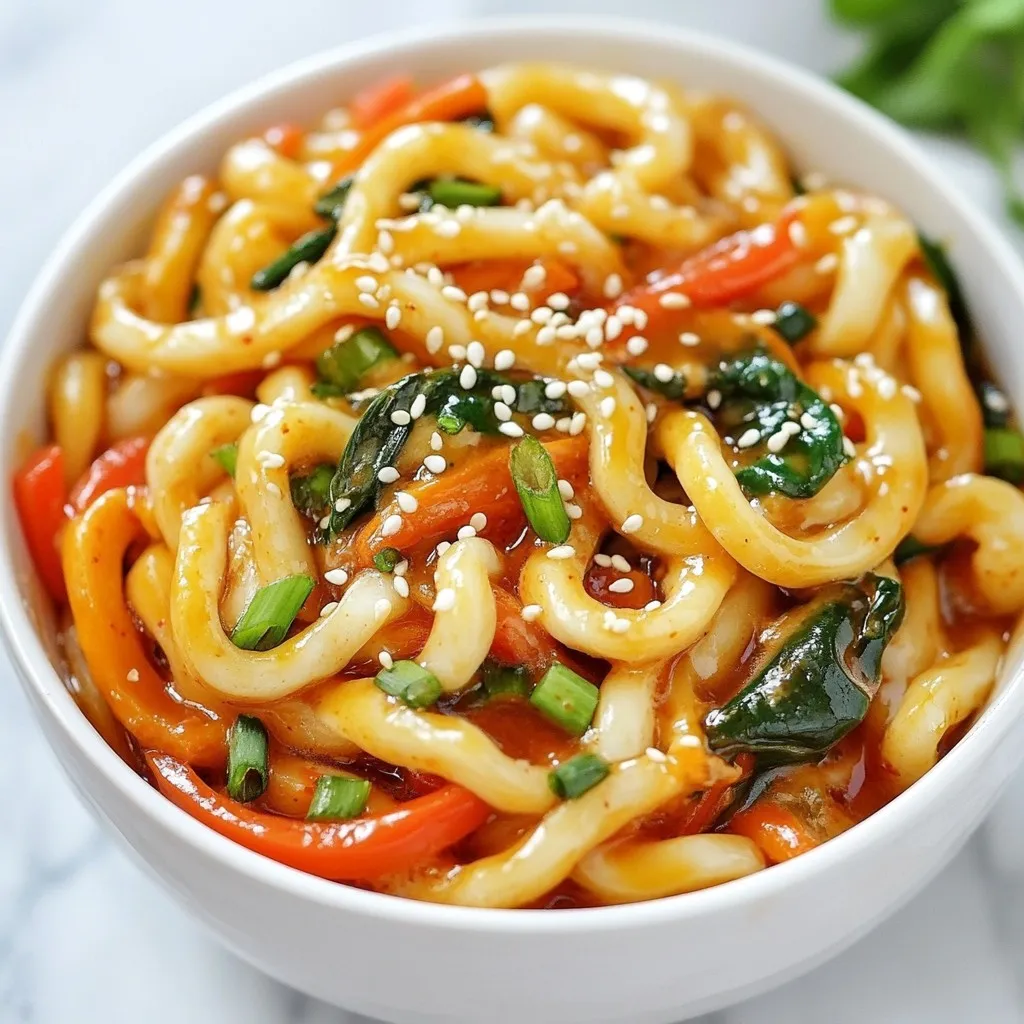
Craving a delicious meal that’s easy to make? Let’s dive into a rich and spicy world with my creamy gochujang udon recipe. This dish is packed with warmth, creamy sauce, and delicious flavors. Plus, it’s simple enough for any cook to master! Ready to impress your taste buds and wow your dinner guests? Let’s get started with the ingredients and step-by-step instructions!
Why I Love This Recipe
- Bold Flavors: This recipe combines the rich, umami flavors of gochujang with creamy coconut milk, creating a deliciously unique dish.
- Quick Preparation: With just 25 minutes from start to finish, this meal is perfect for busy weeknights.
- Versatile Ingredients: Feel free to swap in your favorite vegetables or proteins, making it customizable to your taste.
- Comfort Food: The creamy texture and satisfying noodles make this dish incredibly comforting and perfect for any occasion.
Ingredients
List of Ingredients
- 300g udon noodles
- 1 tablespoon olive oil
- 1 small onion, sliced
- 2 cloves garlic, minced
- 1 cup spinach, fresh
- 1 carrot, julienned
- 1 bell pepper (any color), sliced
- 1 tablespoon gochujang (Korean chili paste)
- 200ml coconut milk
- 1 tablespoon soy sauce
- 1 teaspoon sesame oil
- 1 tablespoon honey or maple syrup
- Salt and pepper to taste
- Sesame seeds for garnish
- Chopped green onions for garnish
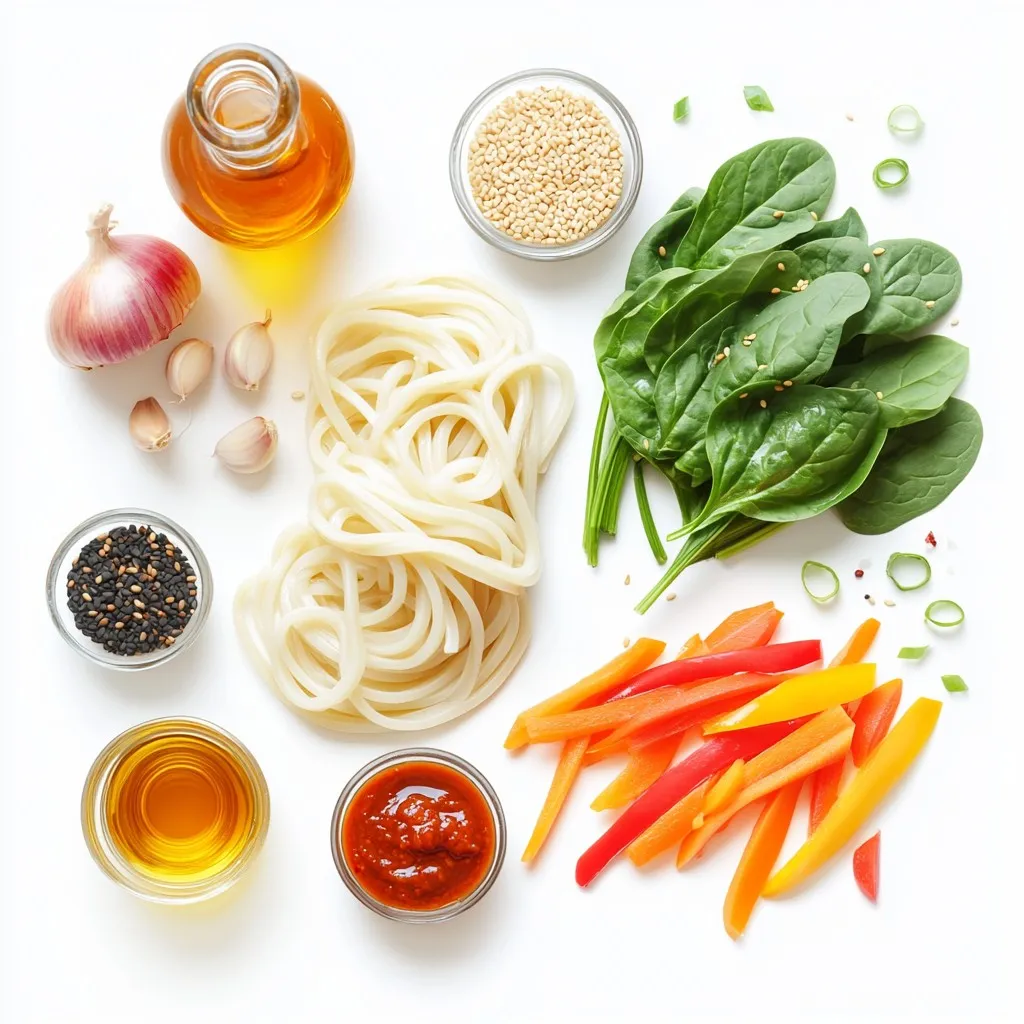
For this creamy gochujang udon, you need a few key ingredients. First, start with 300g of udon noodles. These thick noodles are perfect for holding sauce and flavor. Next, gather your vegetables and aromatics. You will use one small onion, sliced, and two cloves of minced garlic. Both add a great base flavor.
You'll also want one cup of fresh spinach, a julienned carrot, and a sliced bell pepper. These veggies add color and crunch. Now let’s talk about the creamy sauce ingredients. You need one tablespoon of gochujang, which gives that spicy kick. Then, mix in 200ml of coconut milk for creaminess. Add one tablespoon of soy sauce, one teaspoon of sesame oil, and one tablespoon of honey or maple syrup for sweetness. Lastly, season with salt and pepper to taste.
Don’t forget garnishes! Toasted sesame seeds and chopped green onions make your dish pop. Enjoy the vibrant flavors and textures in every bite!
Step-by-Step Instructions
Cooking the Udon Noodles
To start, cook the udon noodles. Boil water in a large pot. Add the udon noodles and cook them according to the package. This usually takes about 8-10 minutes. When done, drain the noodles and set them aside.
Sautéing the Vegetables
Next, grab a large frying pan or wok. Heat a tablespoon of olive oil over medium heat. Add one sliced onion. Cook it until it turns clear, about 3-4 minutes. Then, stir in two minced garlic cloves. Cook for one more minute. Now add one julienned carrot and one sliced bell pepper. Stir-fry the veggies for around 5 minutes until they soften. Finally, toss in one cup of fresh spinach. Cook until the spinach wilts, which takes about 2 minutes.
Preparing the Creamy Gochujang Sauce
In a small bowl, mix up the sauce. Combine one tablespoon of gochujang, 200ml of coconut milk, one tablespoon of soy sauce, one teaspoon of sesame oil, and one tablespoon of honey or maple syrup. Whisk until the mix is smooth and creamy.
Combining and Serving the Dish
Pour the creamy gochujang sauce over the sautéed vegetables. Stir for about 2 minutes to heat everything together. Then, add the cooked udon noodles to the pan. Gently toss everything until the noodles are well coated in the sauce. Heat for another 2-3 minutes. Taste and adjust with salt and pepper if needed. Now, plate your creamy gochujang udon. Top with sesame seeds and chopped green onions for a nice touch. Enjoy your meal!
Tips & Tricks
Best Practices for Cooking Udon Noodles
To cook udon noodles perfectly, follow these steps:
- Use plenty of water: Fill a large pot with water to boil the noodles.
- Don’t overcrowd: Cook noodles in batches if needed. This helps them cook evenly.
- Check doneness: Follow package instructions closely, usually around 8-10 minutes.
- Rinse with cold water: After draining, rinse noodles to stop cooking. This keeps them firm.
Flavor Enhancements and Adjustments
You can easily tweak the flavors in your creamy gochujang udon:
- Add more gochujang: For a spicier kick, add an extra tablespoon.
- Try different sweeteners: Honey adds depth, but maple syrup gives a nice twist.
- Incorporate other sauces: A splash of fish sauce or tamari can add umami.
- Experiment with herbs: Fresh cilantro or basil can brighten the dish.
Presentation Tips for Garnishing
A beautiful plate makes your meal more inviting. Here are some tips:
- Use a clean plate: Wipe the edges for a neat look.
- Sprinkle sesame seeds: Add a sprinkle for a nice crunch.
- Top with green onions: Chopped green onions add color and freshness.
- Create height: Stack the noodles or veggies for a more dynamic presentation.
Pro Tips
- Fresh Ingredients: Use fresh vegetables for the best flavor and texture. You can customize the veggies based on your preference or seasonal availability.
- Adjust the Spice: If you prefer a milder dish, start with half the amount of gochujang and gradually add more to taste.
- Perfectly Cooked Udon: Make sure not to overcook the udon noodles; they should be tender but still chewy. Rinse them under cold water after cooking to stop the cooking process.
- Garnish for Flavor: Don’t skip the garnish! Chopped green onions and sesame seeds not only enhance the dish's presentation but also add a nice crunch and flavor.
Variations
Gluten-Free Substitutions
If you need a gluten-free version, swap the udon noodles for rice noodles. Rice noodles are easy to find and cook quickly. You can also use gluten-free soy sauce. Look for tamari, which works well in this recipe. These swaps keep the dish tasty without gluten.
Protein Additions (Tofu, Chicken, etc.)
Adding protein makes this dish even better. You can use tofu or chicken. For tofu, choose firm or extra-firm. Cube it and sauté until golden. If you like chicken, use boneless, skinless pieces. Cook them until fully done, then slice. Both options fit perfectly in the creamy sauce.
Different Vegetable Options
Feel free to mix your favorite veggies. Broccoli, zucchini, or snap peas work great. Just cut them into small pieces. You can also add mushrooms for extra flavor. Adjust cooking times to keep the veggies crisp and bright. This dish is all about your taste, so get creative!
Storage Info
How to Store Leftovers
To keep your creamy gochujang udon fresh, place leftovers in an airtight container. Let the noodles cool before sealing the container. Store them in the fridge for up to three days. This helps maintain their flavor and texture.
Reheating Tips
When you are ready to enjoy your leftovers, reheating is simple. You can use a microwave or a pan. If using a microwave, heat in short bursts, stirring in between. This ensures even heating. If using a pan, add a splash of water or broth to help the noodles regain their creaminess as you heat them over medium-low heat.
Freezing Instructions
You can freeze creamy gochujang udon, but it may change texture. First, let the dish cool completely. Then, transfer it to a freezer-safe container. Seal tightly, and label with the date. It can last in the freezer for up to three months. When ready to eat, thaw in the fridge overnight and reheat as mentioned above. This method keeps your meal tasty and ready for a quick dinner.
FAQs
What is Gochujang and where can I find it?
Gochujang is a Korean chili paste. It has a sweet and spicy flavor. You can find it in Asian markets or online. Look for it in jars or squeeze bottles. It adds depth to many dishes, not just udon.
Can I use other types of noodles for this recipe?
Yes, you can use other noodles. Soba noodles and rice noodles work well too. Just cook them according to package directions. Adjust the cooking time as needed. Each type of noodle brings a unique taste and texture.
How can I make the dish spicier or less spicy?
To make it spicier, add more gochujang. You can also add sliced fresh chili peppers. For less spice, use less gochujang. You can also mix in some coconut milk to cool it down. Adjust to match your taste.
This blog post covered how to make a delicious udon noodle dish. We explored the key ingredients, from the noodles to the creamy sauce. I shared step-by-step instructions for cooking, sautéing, and serving your meal. Tips and tricks help you enhance flavors and present your dish beautifully. Plus, I discussed variations like gluten-free options and protein choices.
In closing, enjoy experimenting with this recipe. Your custom twist will make it special. Happy cookin