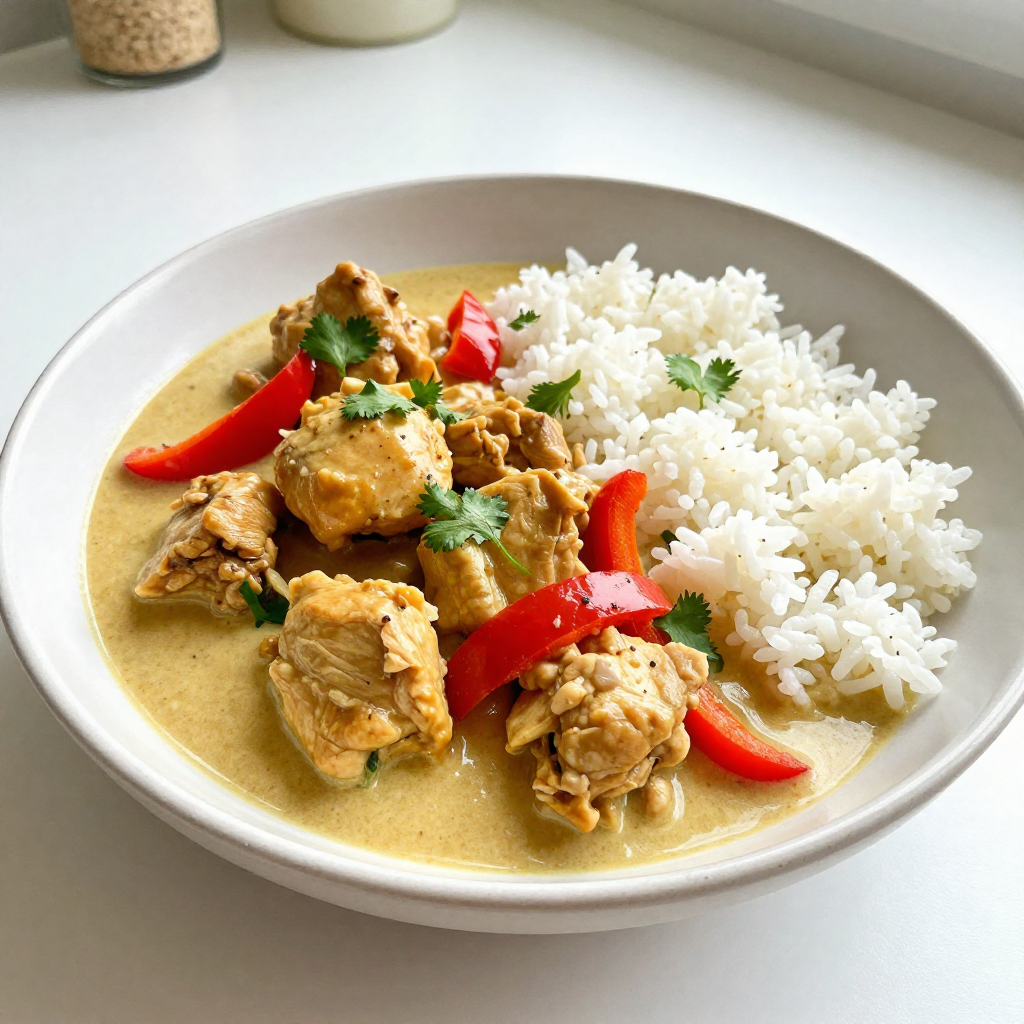
Looking for a quick and tasty meal? You’ve found it! This Easy Coconut Chicken Curry packs a punch of flavor without any fuss. With simple ingredients and straightforward steps, you can impress your family or guests in under an hour. Join me as we explore this delicious dish that’s sure to become a favorite in your home. Let’s get cooking!
Why I Love This Recipe
- Quick and Easy: This coconut chicken curry can be prepared in just 30 minutes, making it perfect for busy weeknights.
- Tropical Flavors: The combination of coconut milk, lime juice, and red curry paste creates a deliciously vibrant dish that transports you to a tropical paradise.
- Healthy Ingredients: Packed with chicken, spinach, and bell peppers, this curry is not only tasty but also nutritious.
- Versatile Serving Options: Serve it over fluffy jasmine rice or protein-rich quinoa to customize your meal experience.
Ingredients
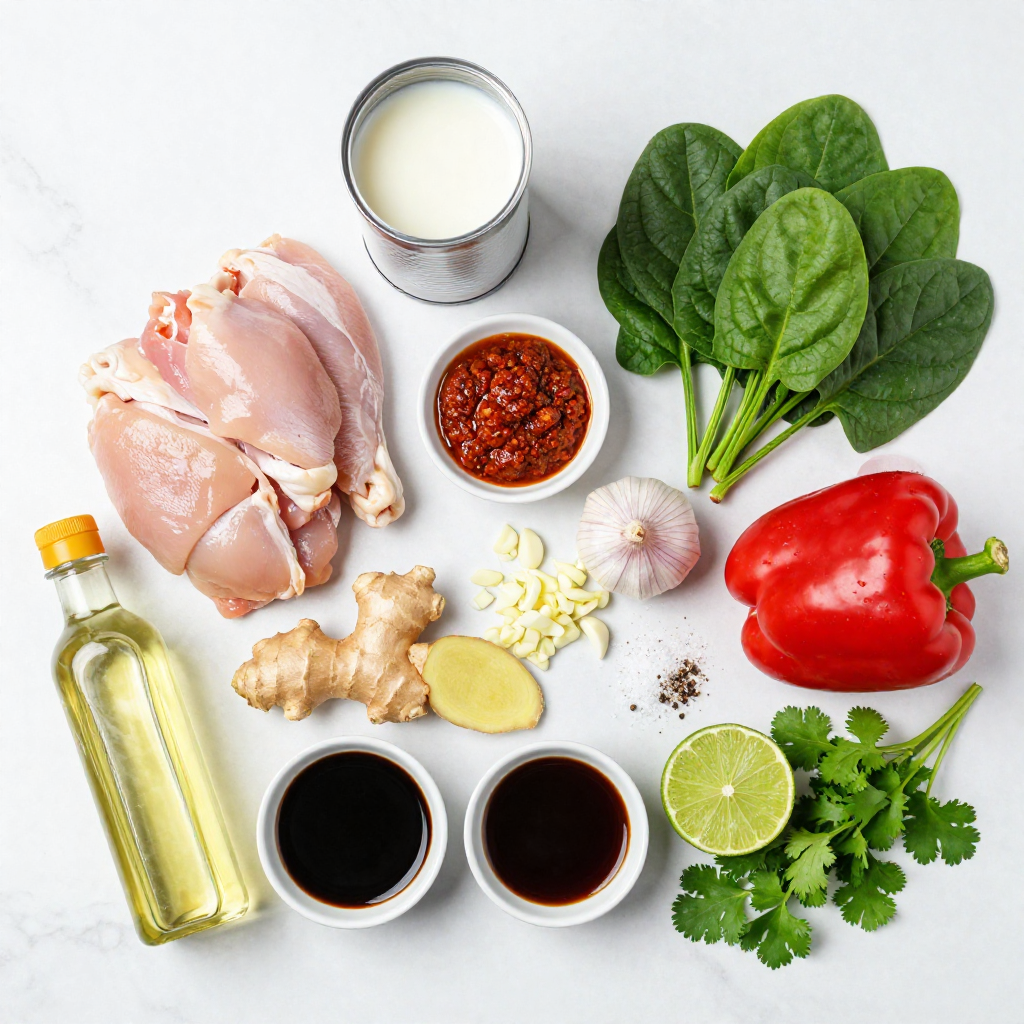
List of Ingredients
- 1 lb (450g) boneless chicken thighs, cubed
- 1 can (14 oz) coconut milk
- 2 tablespoons red curry paste
- 1 medium onion, finely chopped
- 3 garlic cloves, minced
- 1 tablespoon ginger, grated
- 1 red bell pepper, sliced
- 1 cup spinach leaves
- 2 tablespoons vegetable oil
- 1 tablespoon soy sauce
- 1 tablespoon lime juice
- Salt and pepper to taste
- Fresh cilantro for garnish
- Cooked jasmine rice or quinoa for serving
Measurements and Substitutions
For chicken, you can use skinless chicken breasts if you prefer. They will work just fine. If you want a lighter option, try tofu or chickpeas instead. Coconut milk gives a creamy taste, but you can swap it with almond milk for a lighter flavor. Use Thai green curry paste for a different taste or adjust the amount based on your spice level.
Optional Garnishes
Fresh cilantro makes a great garnish. You can also use lime wedges for a fresh burst of flavor. Toasted sesame seeds add a nice crunch. If you have some, sliced green onions can give a nice color and taste too. Feel free to get creative with your garnishes!
Step-by-Step Instructions
Preparation Steps
1. Start by gathering all your ingredients. This makes cooking easier.
2. Cube the boneless chicken thighs into bite-sized pieces.
3. Finely chop the onion and slice the red bell pepper.
4. Mince the garlic and grate the ginger.
5. Measure out the red curry paste, soy sauce, and lime juice.
6. Rinse the spinach leaves and set them aside for later.
Cooking Steps
1. Heat the vegetable oil in a large skillet over medium heat.
2. Add the chopped onion and sauté until it looks clear, around 5 minutes.
3. Mix in the minced garlic and grated ginger, cooking for 1 more minute.
4. Add the cubed chicken thighs to the pan, cooking until they brown, about 6-7 minutes.
5. Stir in the red curry paste, making sure the chicken is well coated.
6. Pour in the coconut milk and stir to combine. Let it simmer gently.
7. Add the sliced red bell pepper, cooking for another 5-7 minutes.
8. Once the chicken is cooked, add the spinach leaves and stir until they wilt, about 2 minutes.
9. Finish the dish by adding soy sauce and lime juice. Season with salt and pepper to your taste.
Serving Suggestions
1. Serve the curry hot over cooked jasmine rice or quinoa.
2. Top each bowl with fresh cilantro for a burst of flavor.
3. For extra crunch, serve with lime wedges on the side.
4. Pair it with naan bread for a delightful meal experience.
Tips & Tricks
Enhancing Flavor and Texture
To make your coconut chicken curry even tastier, consider these simple tips:
- Fresh Ingredients: Use fresh garlic and ginger for a bright taste.
- Curry Paste: Experiment with different brands of red curry paste to find your favorite.
- Coconut Milk: Choose full-fat coconut milk for a creamier texture.
- Add Sweetness: A teaspoon of sugar can balance the spice.
Common Mistakes to Avoid
Here are some common missteps when making this dish:
- Overcooking Chicken: Avoid overcooking the chicken. It can become tough and dry.
- Skipping the Sauté: Don’t skip sautéing the onions and garlic. This adds depth of flavor.
- Not Simmering Enough: Let your curry simmer to meld the flavors well.
Recommended Cooking Tools
Having the right tools can make cooking easier:
- Large Skillet: A good skillet helps with even cooking.
- Wooden Spoon: Use a sturdy wooden spoon to stir without scratching your pan.
- Measuring Cups: Accurate measurements ensure the right flavor balance.
- Chef’s Knife: A sharp knife makes chopping quick and safe.
Pro Tips
- Use Fresh Ingredients: For the best flavor, opt for fresh ginger and garlic instead of pre-minced versions. Fresh ingredients have a more vibrant taste that enhances the curry.
- Adjust the Spice Level: If you prefer a milder curry, start with less red curry paste and add more to taste as it cooks. This allows you to control the heat according to your preference.
- Enhance with More Vegetables: Feel free to add other vegetables like carrots, peas, or zucchini for added nutrition and color. Just adjust the cooking time accordingly to ensure everything is tender.
- Rest Before Serving: Allow the curry to rest for a few minutes after cooking. This helps the flavors meld together and results in a more delicious dish.
Variations
Vegetarian or Vegan Options
You can easily make this curry vegetarian or vegan. Instead of chicken, use tofu or chickpeas. Tofu gives a nice texture, while chickpeas add protein. Replace the chicken with either option and follow the same steps. Use vegetable broth instead of chicken broth for extra flavor. Always check your curry paste; some may have fish sauce.
Alternative Proteins
If you want to try different proteins, shrimp or fish work well. For shrimp, add them after the chicken is almost cooked. They need less time to cook. For fish, choose firm types like cod or halibut. Cut them into chunks and stir in during the coconut milk step. They will cook through in just minutes.
Adjusting Spice Levels
To change the spice level, adjust the red curry paste. For a milder taste, use less paste. You can also add sugar to balance the heat. If you love spice, add fresh chili peppers or a dash of cayenne. Taste as you go to find your perfect heat level.
Storage Info
How to Store Leftovers
After you enjoy your coconut chicken curry, let it cool. Transfer leftovers to an airtight container. Store the container in the fridge. This keeps it fresh for up to three days. If you want the best taste, eat it sooner.
Reheating Instructions
To reheat, you can use the stove or microwave. If using the stove, put the curry in a pan. Heat it over low heat, stirring often until hot. If using the microwave, place the curry in a microwave-safe bowl. Cover it loosely and heat for one to two minutes. Stir halfway to ensure even heating. Always check that it is hot throughout.
Freezing Coconut Chicken Curry
You can freeze this coconut chicken curry for later. First, let it cool completely. Then, scoop it into a freezer-safe container. Seal it tightly to prevent freezer burn. Label the container with the date and type of dish. You can freeze it for up to three months. When you’re ready, thaw it in the fridge overnight before reheating. This way, you’ll have a tasty meal ready when you need it!
FAQs
Can I use different types of meat?
Yes, you can! You can swap chicken for pork, beef, or shrimp. Each meat adds its own flavor. Just adjust cooking times. For shrimp, cook until they turn pink. For pork or beef, make sure they are fully cooked through.
What can I substitute for coconut milk?
If you need a substitute, try almond milk or soy milk. You can also mix half and half with cream for a richer taste. Just keep in mind, the flavor will be different. If you want a hint of coconut, use coconut cream.
How do I make this dish spicier?
To add spice, use more red curry paste. You can also add sliced fresh chili peppers. If you like it extra hot, sprinkle in some cayenne pepper. Start with a little, then taste and adjust as needed.
In this post, I covered the ingredients you need, from measures to tasty garnishes. I shared step-by-step cooking steps and serving tips to make your dish shine. You learned how to enhance flavor and avoid common mistakes. We also explored variations, storage tips, and answered your burning questions.
Cooking is all about trying new things. Don't be afraid to experiment with flavors and textures. Enjoy the journey and savor each bite!