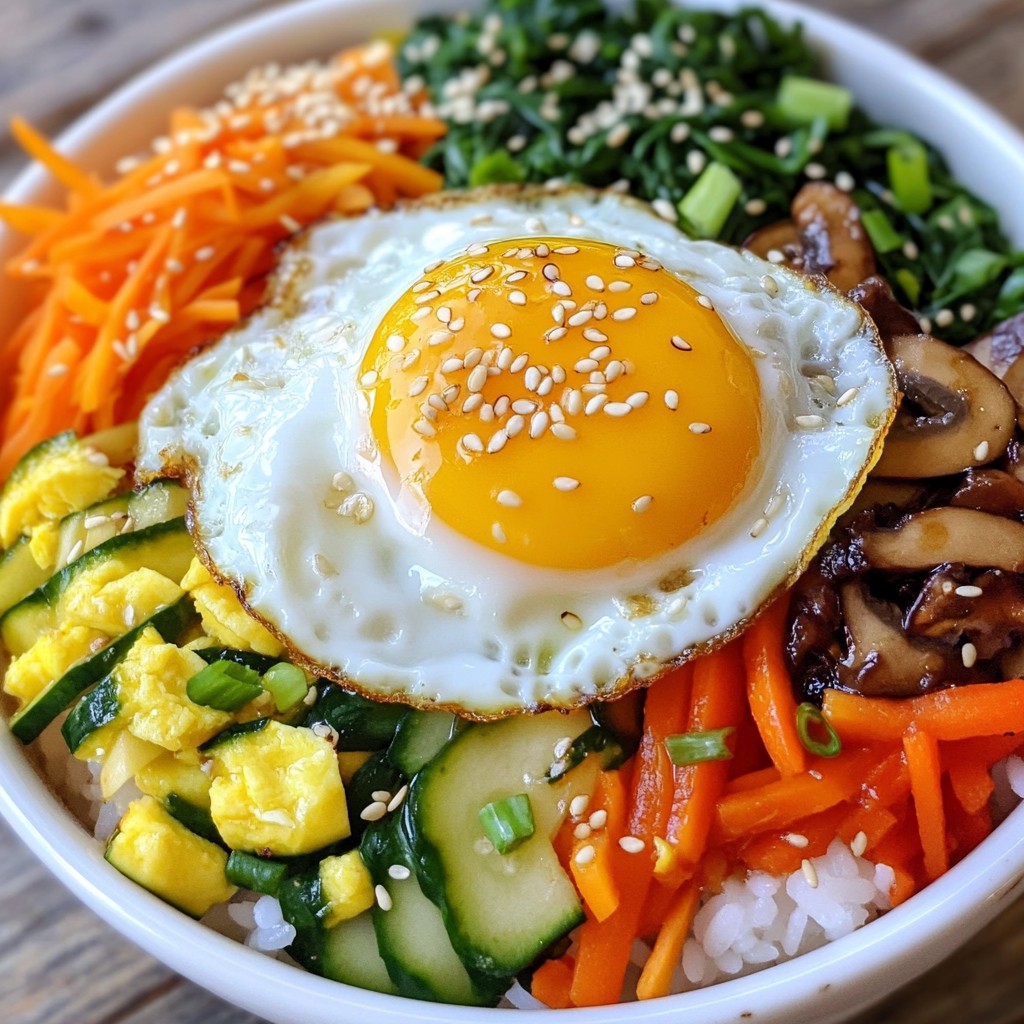
If you crave a quick, tasty meal, you’ll love this easy Korean Bibimbap recipe! Packed with colorful veggies, protein, and rich flavor, this dish is perfect for busy days. In just a few simple steps, you’ll create a meal that not only fills you up but also delights the senses. Join me as I guide you through this speedy, delicious experience! Let’s make your kitchen the best place to be tonight.
Why I Love This Recipe
- Colorful Presentation: This bibimbap is a feast for the eyes with its vibrant array of vegetables, making each bowl visually appealing.
- Healthy Ingredients: Packed with fresh vegetables and wholesome rice, this dish is not only delicious but also nutritious.
- Customizable: You can easily swap out vegetables or add proteins like chicken or tofu, tailoring it to your taste preferences.
- Quick and Easy: With a total time of just 25 minutes, it’s perfect for a weeknight meal that doesn’t compromise on flavor.
Ingredients
Key Ingredients for Quick Korean Bibimbap
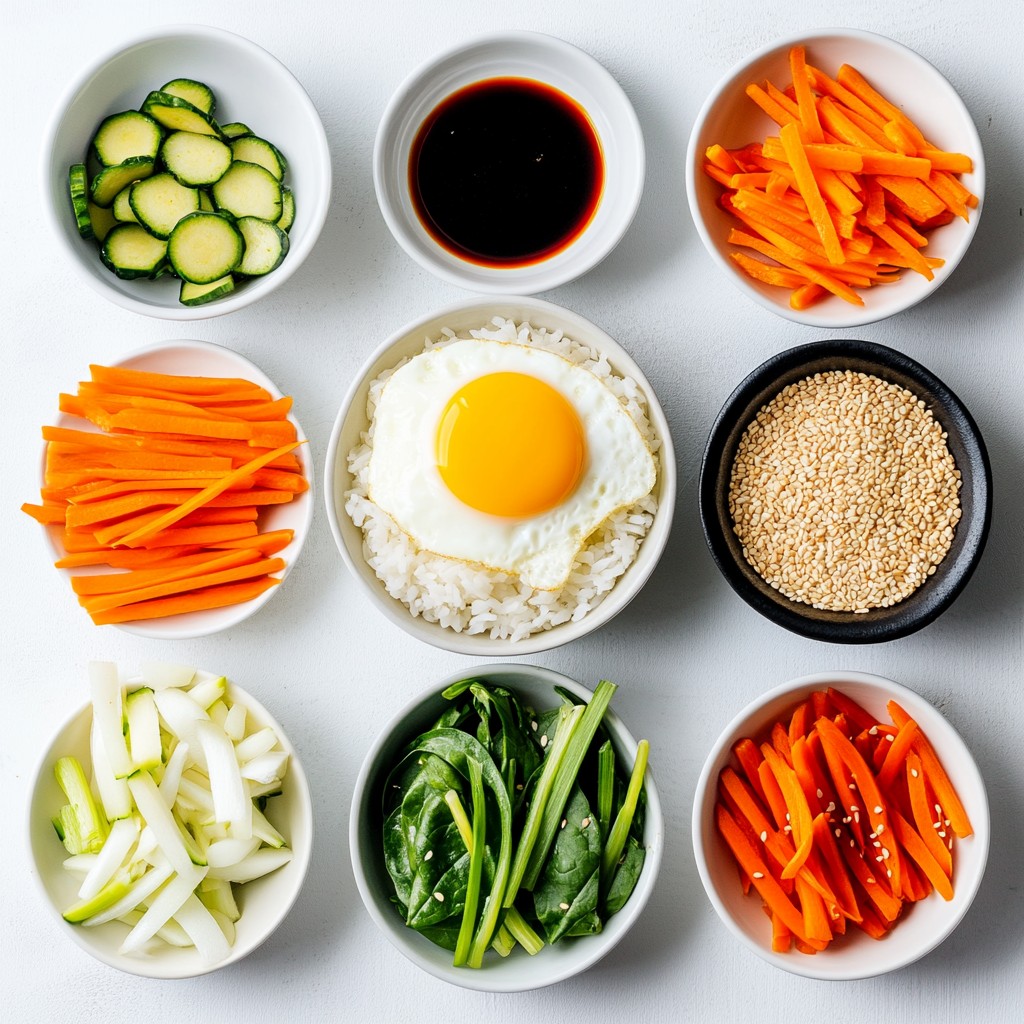
To make quick Korean bibimbap, you need fresh and colorful ingredients. Here’s what you’ll need:
- 2 cups cooked jasmine rice
- 1 cup spinach, blanched and squeezed dry
- 1 cup shiitake mushrooms, sliced
- 1 small carrot, julienned
- 1 small zucchini, julienned
- 1 egg
- 2 tablespoons gochujang (Korean chili paste)
- 1 tablespoon sesame oil
- 2 tablespoons soy sauce
- 1 teaspoon sesame seeds
- Salt and pepper to taste
- Green onions, chopped for garnish
These ingredients bring taste and color to your bowl. You can find them at most grocery stores or Asian markets. Fresh veggies make your bibimbap bright and healthy.
Essential Cooking Supplies
For this recipe, you’ll need some basic cooking tools:
- Large skillet
- Non-stick frying pan
- Serving bowl
- Knife and cutting board
- Measuring spoons
Having these tools ready will help you cook quickly. The skillet helps sauté the veggies, while the non-stick pan is perfect for the egg.
Nutritional Information for Bibimbap
Bibimbap is not just tasty; it’s also nutritious. Here’s a quick look at its benefits:
- Calories: About 400 per serving
- Protein: Egg and mushrooms provide protein, about 15 grams
- Vitamins: Spinach and veggies add vitamins A and C
- Fiber: The vegetables offer fiber, promoting good digestion
This meal is balanced with carbs, protein, and healthy fats. It’s a great choice for lunch or dinner! Plus, you can mix and match the veggies to fit your diet. Enjoy the health benefits while savoring every bite.
Step-by-Step Instructions
Preparing the Vegetables
Start by heating 1 tablespoon of sesame oil in a large skillet over medium heat. Once the oil is hot, add the sliced shiitake mushrooms. Sauté them for 3-4 minutes until they soften. This step brings out their rich flavor. After that, set the mushrooms aside.
In the same skillet, toss in the julienned carrots and zucchini. Stir-fry them for about 2-3 minutes. You want them slightly tender but still crisp. Add a pinch of salt to season. Once done, set these veggies aside as well.
Finally, don’t forget the spinach! Blanch it in hot water for a minute, then squeeze out the excess water. This keeps the spinach bright and fresh.
Cooking the Egg: Tips for Perfection
For the perfect egg, use a non-stick frying pan. Heat it to medium-low. Crack the egg into the pan and cook it sunny-side up. Watch closely as the whites set. You want the yolk to stay runny. This adds a nice creaminess to your bibimbap.
If you prefer a firmer yolk, cook it longer. Once done, remove the egg from heat and set it aside.
Assembling Your Bibimbap Bowl
Grab a large serving bowl and start with a base of cooked jasmine rice. This rice is fluffy and perfect for bibimbap.
Next, neatly arrange your sautéed veggies around the rice. Place the spinach, mushrooms, carrots, and zucchini in colorful sections. This makes the dish look beautiful.
Now, it’s time for the sauce! Spoon gochujang over the veggies and rice. Add a drizzle of soy sauce and the remaining sesame oil for extra flavor.
Finally, place your cooked egg on top. Sprinkle sesame seeds and chopped green onions for a delightful finish.
Before you dig in, mix everything together. This helps blend all the flavors. Enjoy your quick and healthy Korean bibimbap!
Tips & Tricks
Quick Cooking Techniques for Efficiency
To make your bibimbap fast and easy, use pre-cooked rice. This saves time and effort. You can find it in most grocery stores. Simply heat it in the microwave before serving. For the veggies, chop them in advance. This way, they are ready when you need them.
When sautéing, use a large skillet. This allows you to cook multiple ingredients at once. Start with mushrooms, then add carrots and zucchini. They need only a few minutes in the pan. This method keeps your cooking quick and fun.
How to Enhance Flavor with Condiments
The magic of bibimbap lies in its flavors. Gochujang is a must for spice and depth. It adds a rich, savory kick. If you want more heat, try adding more gochujang. Sesame oil brings a nutty flavor. A drizzle enhances all the ingredients.
Soy sauce adds saltiness and umami. Use it sparingly to avoid overwhelming the dish. Sesame seeds and chopped green onions are great for garnish. They add crunch and freshness. Don’t skip these; they make a big difference!
Recommended Cooking Tools and Equipment
For this recipe, you need a few simple tools. A large skillet is key for sautéing. A non-stick frying pan works best for the egg. This keeps it from sticking and helps it cook evenly.
Use a cutting board and a sharp knife for chopping veggies. A mixing bowl helps when you combine the ingredients. Lastly, have a spoon handy for serving. These tools will help you create a delicious meal without hassle.
Pro Tips
- Use Fresh Ingredients: Fresh vegetables enhance the flavor and nutritional value of your bibimbap. Opt for seasonal produce whenever possible.
- Customize Your Protein: Feel free to add protein like grilled chicken, beef, or tofu to make this dish more filling and balanced.
- Perfect the Egg: A perfectly cooked sunny-side-up egg with a runny yolk adds creaminess to your bibimbap. Practice makes perfect!
- Mix It Up: Don’t be afraid to mix the gochujang and soy sauce into the rice before adding the vegetables for a more uniform flavor throughout.
Variations
Vegetarian-Friendly Options
If you want a veggie-packed bibimbap, leave out the egg or meat. You can use more veggies like bell peppers, broccoli, or bean sprouts. Adding tofu makes it hearty and filling. Simply cube the tofu and sauté it in sesame oil until golden. This keeps the dish light and healthy while still being full of flavor.
Protein Substitutes: Chicken, Beef, or Tofu
For those who enjoy meat, chicken and beef are great choices. Cook thin strips of chicken or beef in the same pan with sesame oil. This gives them a nice flavor. If you want a quick and easy protein, go for cooked shrimp. For a vegetarian option, use marinated tofu instead. Each protein adds its own taste to the bibimbap.
Spice Levels: Adjusting Gochujang to Your Taste
Gochujang is key for flavor, but you can adjust the heat. If you like it spicy, add more gochujang. For a milder taste, use less. You can mix gochujang with a bit of honey or sugar to balance the heat. This creates a sweet and spicy flavor. Always taste and adjust as you go. Enjoy finding the right spice level for you!
Storage Info
Storing Leftovers: Best Practices
After enjoying your bibimbap, store any leftovers. Use an airtight container. Keep the rice and veggies separate. This helps keep them fresh. Place the egg on top before serving again. You can store leftovers in the fridge for up to three days.
Reheating Tips for Optimal Texture
When it’s time to eat, reheat your bibimbap. Use a microwave or a skillet. If using a microwave, cover the bowl with a damp paper towel. This keeps moisture in. Heat for about one minute, then stir. If using a skillet, add a splash of water. Cover and heat on low for about five minutes. This helps the rice remain soft.
Freezing and Thawing Suggestions
You can freeze bibimbap if you have too much. Place the rice and veggies in freezer bags. Remove as much air as you can. Freeze for up to three months. When you’re ready to eat, thaw in the fridge overnight. Reheat following the tips above for the best taste.
FAQs
What can I substitute for gochujang?
If you cannot find gochujang, you can use sriracha or red pepper flakes. Mix them with a bit of sugar to mimic the sweet and spicy taste of gochujang. You can also combine miso paste with chili powder for a unique flavor. Adjust the amount based on your heat preference.
Gochujang brings a special flavor to bibimbap. It adds heat and depth. If you choose a substitute, remember that the taste may change. Always taste as you go, and adjust the flavors to fit your liking.
Can I use other types of rice?
Yes, you can use other types of rice. Brown rice, sushi rice, or even quinoa can work well. Brown rice adds a nutty flavor and is more filling. Sushi rice gives a sticky texture that binds well with toppings. Quinoa is a great gluten-free option.
Just make sure that whatever rice you use is cooked properly. The rice should be warm when you assemble your bibimbap. This helps melt the egg yolk and blend the flavors.
How do I make Bibimbap spicy?
To make your bibimbap spicy, add more gochujang or your chosen hot sauce. You can mix some chili oil into the sauce for extra heat. Another option is to sprinkle in crushed red pepper flakes when cooking the vegetables.
Taste your sauce before adding it to the bowl. This way, you can adjust the spice to your liking. You can also serve sliced fresh chili peppers on the side for those who like it hot!
Bibimbap is a tasty and fun dish to make. You learned about key ingredients, cooking steps, and helpful tips. I shared ways to customize your bibimbap with different proteins and spice levels. Storing and reheating leftovers is easy too.
Experiment with flavors and enjoy your unique creation. Cooking should be simple and enjoyable. Now it’s time to get in the kitchen and make your delicious bibimbap!