
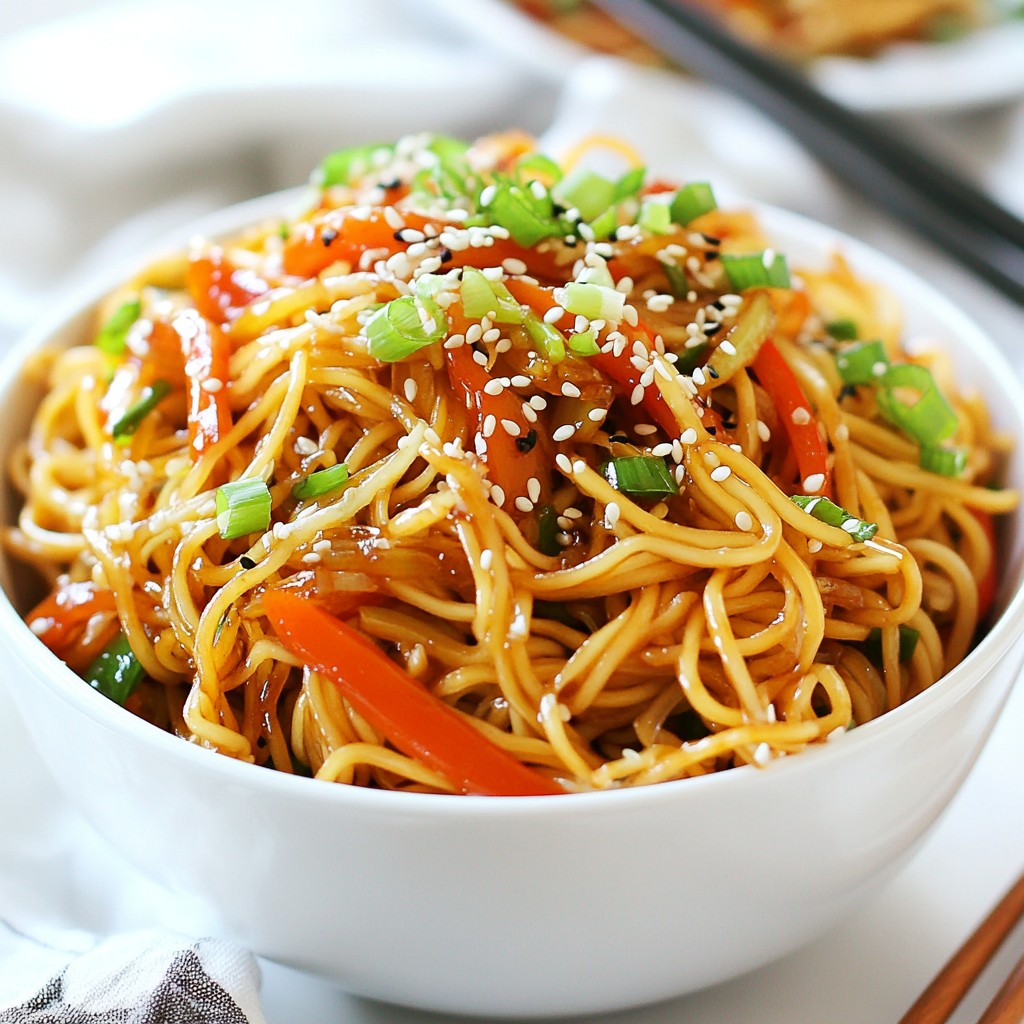
Are you craving a quick, tasty dish that satisfies your hunger? Discover how to whip up a delicious Panda Express Chow Mein right at home! I’ll guide you through simple ingredients, easy steps, and helpful tips. You won’t need to spend hours in the kitchen. Let’s get you enjoying a flavorful meal in no time! Ready to dive into this easy and satisfying recipe?
Why I Love This Recipe
- Quick and Easy: This recipe comes together in just 20 minutes, making it perfect for busy weeknights or a last-minute meal.
- Customizable: Feel free to add your favorite vegetables or proteins to the chow mein, making it a versatile dish for any palate.
- Delicious Flavor: The combination of soy sauce, oyster sauce, and sesame oil creates a mouthwatering taste that rivals takeout.
- Healthy Ingredients: Packed with fresh vegetables, this chow mein is not only tasty but also a nutritious choice for your meal.
Ingredients
Key Ingredients List
To make Quick Panda Express Chow Mein, gather these key ingredients:
- 8 oz chow mein noodles
- 2 tablespoons vegetable oil
- 1 cup shredded carrots
- 1 cup bean sprouts
- 1 cup sliced bell peppers (red and green)
- 1/2 cup chopped green onions
- 3 cloves garlic, minced
- 3 tablespoons soy sauce
- 1 tablespoon oyster sauce (or hoisin sauce for a vegetarian option)
- 1 teaspoon sesame oil
- Salt and pepper to taste
- Optional: Crushed red pepper flakes for spice
Recommended Brands for Chow Mein Noodles
For chow mein noodles, I recommend brands like:
- La Choy
- Dynasty
- Kame
These brands offer good texture and flavor. You can find them in most grocery stores or online.
Possible Ingredient Substitutions
If you lack some ingredients, don't worry! Here are some easy swaps:
- Use spaghetti or rice noodles if you can't find chow mein noodles.
- Any fresh vegetables work, like broccoli or snap peas.
- Instead of oyster sauce, use soy sauce with a bit of sugar for sweetness.
- For a gluten-free option, try tamari instead of soy sauce.
These substitutions keep the dish tasty and fun!

Step-by-Step Instructions
Cooking the Noodles
Start by boiling water in a large pot. Add salt to the water for flavor. Once boiling, add 8 oz of chow mein noodles. Cook them for about 3-5 minutes, as the package says. They should be soft but still firm. Drain the noodles in a colander and set them aside.
Preparing the Vegetables
Now, let's heat up some oil. In a large skillet or wok, add 2 tablespoons of vegetable oil. Turn the heat to medium-high. Once the oil is hot, add 1 cup of shredded carrots and 1 cup of sliced bell peppers. Also, add 3 cloves of minced garlic. Stir-fry these for about 2-3 minutes. You want them tender but still a bit crunchy.
Combining Ingredients
Next, add the cooked chow mein noodles to your skillet. Toss them with the veggies to mix well. Pour in 3 tablespoons of soy sauce and 1 tablespoon of oyster sauce. If you prefer, you can use hoisin sauce instead. Add 1 teaspoon of sesame oil for that lovely nutty flavor. Stir everything together to coat the noodles and veggies evenly. Finally, add 1 cup of bean sprouts and 1/2 cup of chopped green onions. Stir-fry for another 1-2 minutes until everything is hot. Taste your chow mein and add salt, pepper, and crushed red pepper flakes if you want some heat. Your dish is now ready to serve!
Tips & Tricks
Time-Saving Cooking Techniques
To save time, prep all your veggies first. Chop the bell peppers and green onions. Shred the carrots. This makes cooking quick and easy. Using pre-packaged shredded carrots can also cut down on prep time. When boiling noodles, do it while you heat the oil. This multitasking helps your meal come together faster.
Enhancing Flavor Profiles
Soy sauce is key, but don’t stop there! Mix in oyster sauce for depth. Sesame oil adds a nice nutty taste. For some heat, sprinkle crushed red pepper flakes in. Fresh garlic makes a big difference. The more flavors you add, the better your chow mein will taste.
Common Mistakes to Avoid
One big mistake is overcooking the noodles. They should be firm, not mushy. Also, don’t crowd the skillet. Cook in batches if needed. This keeps the veggies crisp. Lastly, always taste before serving. Adjust salt and pepper to your liking. This simple step can change your dish for the better!
Pro Tips
- Use Fresh Vegetables: Opt for fresh, crisp vegetables to enhance the flavor and texture of your chow mein.
- Customize Your Protein: Add cooked chicken, shrimp, or tofu to make your chow mein a complete meal.
- Don't Overcook the Noodles: Drain the chow mein noodles while they're still slightly firm to maintain a perfect chewy texture.
- Adjust the Sauce: Taste and adjust the soy sauce and oyster sauce according to your preference for a richer flavor.
Variations
Vegetarian and Vegan Options
If you want a meat-free dish, you can easily make chow mein vegetarian or vegan. Just swap the oyster sauce for hoisin sauce. This change keeps the flavors rich and delicious while making it plant-based. Use extra vegetables like broccoli or snow peas for more color and crunch. You can also add tofu for protein. Firm tofu works best; just cube it and stir-fry until golden.
Adding Proteins like Chicken or Tofu
To add protein to your chow mein, consider chicken or tofu. For chicken, cut it into thin strips and stir-fry it first. Cook the chicken until it's golden and cooked through. Then add your veggies and noodles. If you prefer tofu, press it to remove moisture, then cut it into cubes. Stir-fry until it's crispy on the outside for a yummy texture.
Different Sauces for Flavor Changes
Switching up sauces can give your chow mein a new taste. Try adding teriyaki sauce for a sweet and savory kick. For a spicy flavor, mix in chili garlic sauce or sriracha. You can also use a mix of soy sauce and sesame oil for a nutty vibe. Experiment with different sauces to find your favorite combination!
Storage Info
How to Properly Store Leftovers
To keep your chow mein fresh, let it cool first. Place it in an airtight container. Store it in the fridge for up to three days. Make sure to cover the noodles and veggies well. This prevents them from drying out.
Reheating Best Practices
When you’re ready to enjoy your leftovers, heat them in a skillet. Add a splash of water or soy sauce to keep them moist. Stir over medium heat for about five minutes. This method warms the dish evenly and helps restore its flavor.
Freezing Chow Mein for Later Use
If you want to save chow mein for later, freezing works great. Use a freezer-safe container or bag. It will stay good for up to three months. When you’re ready to eat it, thaw in the fridge overnight. Reheat in a skillet as mentioned above. This keeps the taste fresh and delightful.
FAQs
Can I use different types of noodles?
Yes, you can use different noodles. You can try lo mein, rice noodles, or even spaghetti. Each type brings its own flavor and texture. Just remember to adjust the cooking time as needed. The key is to pick a noodle that holds sauce well.
What can I substitute for oyster sauce?
If you need a substitute for oyster sauce, use hoisin sauce. It has a similar sweetness and thickness. You can also mix soy sauce with a bit of sugar for a quick fix. Both options work great in this chow mein.
How long does chow mein last in the fridge?
Chow mein lasts about 3 to 4 days in the fridge. Store it in an airtight container to keep it fresh. When you’re ready to eat, just reheat it in a skillet for the best taste.
Chow mein offers a simple way to enjoy tasty meals at home. You learned about key ingredients, cooking steps, and tips to improve your dish. You can even try different proteins or sauces to mix things up. Don’t forget how to store your chow mein properly to keep it fresh. Mistakes happen, but now you know what to avoid. Remember, cooking can be fun and rewarding. Enjoy making chow mein your way!


