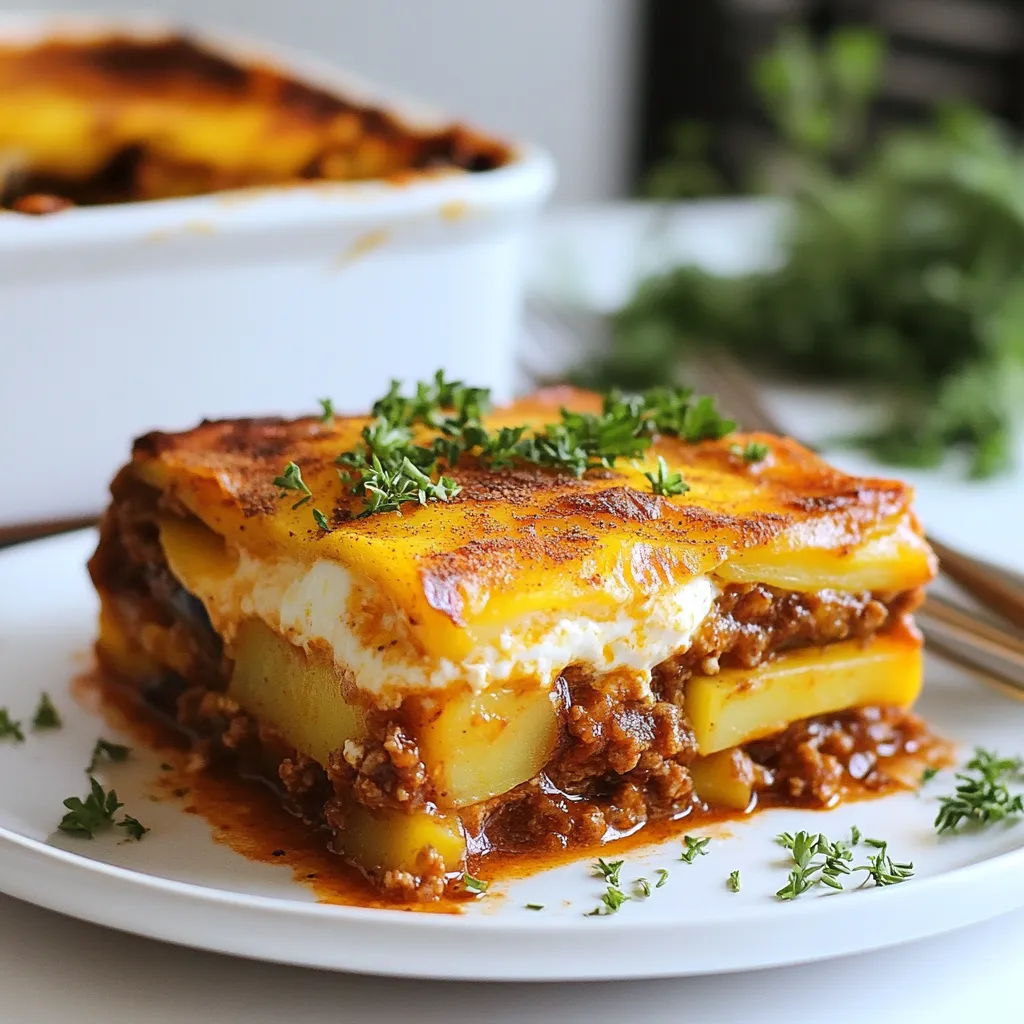
Are you ready to dive into the world of Traditional Moussaka? This rich, layered dish brings together savory ground meat, tender vegetables, and creamy bechamel sauce. With roots in Mediterranean kitchens, it’s comfort food at its finest. In this guide, I’ll share the simple steps, key ingredients, and expert tips to help you master this classic. Get ready to impress your family and friends with a meal they won’t forget!
Why I Love This Recipe
- Comforting Layers: This moussaka features layers of tender potatoes, sautéed eggplants, and a rich meat sauce that create a satisfying and hearty meal.
- Flavorful Spices: The blend of cinnamon, cumin, and oregano adds a unique depth of flavor that sets this dish apart from traditional casseroles.
- Cheesy Topping: The creamy Greek yogurt mixed with eggs and topped with mozzarella creates a golden, bubbly crust that is irresistible.
- Beautiful Presentation:
Ingredients
Key Ingredients for Traditional Moussaka
- Eggplant and Potatoes
You need two large eggplants. Slice them into ¼-inch rounds. Use four medium potatoes, peeled and sliced the same way. These veggies create layers of flavor and texture.
- Ground Lamb or Beef
Use one pound of ground lamb or beef. This meat base adds a rich taste. The choice of meat can change the dish’s flavor.
- Spices and Seasonings
You will need two teaspoons of ground cinnamon, one teaspoon of ground cumin, and one teaspoon of dried oregano. Add salt and pepper to taste. These spices give moussaka its warm, inviting aroma.
- Bechamel Sauce Components
For the topping, gather one cup of plain Greek yogurt, two eggs, and salt. You’ll also want one cup of grated mozzarella cheese. This mix makes a creamy, cheesy layer that brings everything together.

Step-by-Step Instructions
Preparing the Meat Sauce
Sautéing Onions and Garlic
Start by heating 2 tablespoons of olive oil in a large skillet over medium heat. Add the chopped onion and cook until it looks clear, about 5 minutes. Then, add the minced garlic and stir for a minute. This helps to build a strong flavor base.
Browning the Meat
Next, add 1 pound of ground lamb or beef. Use a wooden spoon to break the meat into small pieces. Cook until the meat turns brown, mixing well. This step adds richness to the sauce.
Adding Tomatoes and Spices
Now, stir in 1 can of crushed tomatoes and 2 tablespoons of tomato paste. Add 2 teaspoons of ground cinnamon, 1 teaspoon of ground cumin, and 1 teaspoon of dried oregano. Season with salt and pepper to taste. Let this simmer for about 15 minutes. The sauce will thicken and develop deep flavors.
Preparing the Vegetables
Salting and Drying Eggplant
Slice 2 large eggplants into ¼-inch rounds. Lightly sprinkle salt on the slices and let them sit for 20 minutes. This draws out moisture and bitterness. After 20 minutes, pat the slices dry with a paper towel.
Blanching Potatoes
While the eggplant sits, peel and slice 4 medium potatoes into ¼-inch rounds. Boil water in a large pot. Add the potato slices and blanch for about 5-7 minutes. Drain and set aside. This gives the potatoes a head start on cooking.
Sautéing Eggplant Slices
In a frying pan, heat a little olive oil over medium heat. Add the eggplant slices and sauté for 3-4 minutes on each side. You want them lightly browned but still soft. Remove from heat and set aside.
Assembling the Moussaka
Layering Ingredients
In a greased baking dish, start layering. Add half the potato slices at the bottom. Then, place the sautéed eggplant slices on top. Follow with half of the meat sauce. Repeat these layers again, finishing with meat sauce on top.
Preparing the Topping
In a bowl, whisk together 1 cup of plain Greek yogurt, 2 eggs, and a pinch of salt. This will create a creamy topping for the moussaka.
Final Assembly Steps
Spread the yogurt mixture evenly over the top layer of the moussaka. Then, sprinkle 1 cup of grated mozzarella cheese on top. This will create a delicious crust when baked.
Bake the moussaka in a preheated oven at 375°F (190°C) for about 45 minutes. The top should be golden brown and bubbly. Let it cool for 15 minutes before serving. Enjoy this rich and comforting dish!
Tips & Tricks
Perfecting the Layers
Importance of Salting Eggplant
Salting eggplant is key for a great moussaka. It helps draw out the moisture. This step makes the eggplant less bitter and helps it fry better. To do this, slice the eggplant and sprinkle salt on both sides. Let it sit for about 20 minutes. After that, rinse off the salt and pat the slices dry.
Ensuring Even Cooking
Make sure your layers cook evenly. Start by frying the eggplant until it is golden brown on both sides. When you layer the moussaka, alternate between potatoes, eggplant, and meat sauce. This mix of textures gives a great bite. It also helps the flavors blend nicely.
Achieving a Golden Crust
Whisking Techniques for Bechamel
A good bechamel sauce is smooth and creamy. Whisking well helps combine the yogurt and eggs evenly. Start by mixing the yogurt and eggs in a bowl. Add a pinch of salt. Whisk until it is smooth. This sauce adds a rich layer on top of your moussaka.
Cheese Options for Topping
Cheese adds flavor and a nice crust. I recommend using mozzarella for a gooey finish. You can also try feta for a sharp taste. Sprinkle the cheese on top of the bechamel mixture before baking. This will create a lovely golden crust.
Common Mistakes to Avoid
Overly Watery Sauce
A watery sauce can ruin your moussaka. To avoid this, let the meat sauce simmer longer. This helps it thicken. Also, make sure your eggplant is salted and dried well. This prevents excess moisture.
Under-seasoning
Don’t forget to season your dish well. Use salt, pepper, and spices like cinnamon and oregano. These flavors are what make moussaka special. Taste your sauce as it cooks. Adjust the seasoning before layering it in the dish. This way, every bite is full of flavor.
Pro Tips
- Salting Eggplants: Lightly salting the eggplant slices helps to draw out excess moisture and bitterness, resulting in a more flavorful and tender dish.
- Layering Technique: For the best flavor, ensure that you layer the ingredients evenly and press down gently to compact them, allowing the flavors to meld beautifully.
- Resting Time: Letting the moussaka rest for about 15 minutes after baking helps it set properly, making it easier to serve and enhancing the flavors.
- Cheese Options: Feel free to experiment with different types of cheese for the topping, such as feta or Parmesan, to add a unique twist to the classic recipe.
Variations
Vegetarian Moussaka
Plant-Based Alternatives
You can easily make moussaka vegetarian! Swap out meat for lentils or mushrooms. Both options add great texture and flavor. Use 1 cup of cooked lentils or 2 cups of chopped mushrooms. They will soak up the tasty spices.
Flavor Adjustments
When going meatless, boost flavors with more herbs. Add fresh basil or thyme for a herbaceous touch. Consider using smoked paprika for a deeper taste. This gives the dish richness without meat.
Regional Adaptations
Greek vs. Middle Eastern Styles
Different regions have their takes on moussaka. In Greece, the dish has layers of eggplant and a rich meat sauce. Middle Eastern versions often use potatoes instead of eggplant. Some even add a layer of spiced chickpeas.
Substituting Ingredients
You can mix and match ingredients based on what you have. Use zucchini if you can't find eggplant. Ground turkey or chicken works well in place of lamb or beef. Customize to fit your taste or what’s in your pantry.
Healthier Versions
Low-Carb and Gluten-Free Options
If you want a low-carb moussaka, replace potatoes with cauliflower. It mimics the texture without the carbs. For a gluten-free option, just skip the flour in the topping. You can still enjoy the creamy flavor with Greek yogurt.
Reducing Fat Content
Use lean ground meat to cut back on fat. You can also reduce the amount of cheese on top. Choosing a lower-fat yogurt will keep it creamy while being lighter. These simple swaps make moussaka healthier without losing flavor.
Storage Info
Storing Leftovers
Refrigeration Guidelines
After enjoying your delicious moussaka, let it cool. Place it in an airtight container. It will stay fresh in the fridge for up to 3 days. If you want to keep it longer, consider freezing it.
Freezing Moussaka
To freeze moussaka, cut it into portions. Wrap each piece in plastic wrap, then in foil. Store it in a freezer-safe bag. Moussaka can last up to 3 months in the freezer. When you're ready to eat, thaw it in the fridge overnight.
Reheating Tips
Best Methods for Reheating
The best way to reheat moussaka is in the oven. Preheat your oven to 350°F (175°C). Place the moussaka in a baking dish. Cover it with foil to keep the moisture in. Heat for about 25-30 minutes. You can also use a microwave for quicker results, but it may not heat evenly.
Maintaining Texture and Flavor
To keep the texture and flavor, avoid high heat. Slow and steady is the key. If using a microwave, heat in short bursts. Stir in between to ensure even heating. Enjoy your warm, comforting dish!
FAQs
What is Traditional Moussaka?
Traditional moussaka is a layered dish from Greece. It has eggplant, potatoes, and meat. The meat is often ground lamb or beef. The dish is rich and has a warm, comforting taste. Many people enjoy it for special occasions or family meals. It has deep flavors from spices like cinnamon and cumin. The top layer often features a creamy yogurt and cheese mix. This gives it a delicious golden crust when baked.
Can I Make Moussaka in Advance?
Yes, you can make moussaka ahead of time. This dish keeps well in the fridge. You can prepare it a day before serving. Simply assemble the layers and cover it tightly. Store it in the fridge until you are ready to bake. When you are ready, bake it as normal. You might need to add a few extra minutes to the baking time. This helps ensure it heats through completely.
How Do I Make Moussaka Vegetarian?
You can easily make moussaka vegetarian. Just replace the meat with lentils or mushrooms. Lentils add protein and help with texture. Mushrooms bring a rich, umami flavor. You can also use plant-based ground meat. Use the same spices and layering method. The eggplant and potatoes will still shine in your dish. Your vegetarian moussaka will be just as tasty and satisfying.
What Are the Best Sides to Serve with Moussaka?
Moussaka pairs well with several sides. A fresh Greek salad is a great choice. It adds crunch and brightness to the meal. You can also serve it with crusty bread. This helps soak up any sauce. For a lighter option, try steamed green beans. They add color and a healthy touch. Consider serving tzatziki as a dip, too.
Moussaka is a delicious, layered dish filled with flavor. We covered its key ingredients, like eggplant, meat, and bechamel sauce. I provided step-by-step instructions for preparing the meat sauce and veggies. You learned tips for perfect layers and achieving a golden crust. There are also variations for vegetarians and those wanting healthier options.
Remember, practice makes perfect. Enjoy making moussaka and share it with loved one